Skip to content
Request a quote

EU cosmetic labelling

EU cosmetic labelling: the mandatory information

A cosmetic label is not just design. Under EU cosmetic labelling rules, Article 19 of Regulation (EC) No 1223/2009 lists seven mandatory particulars, and each Member State decides which languages some of them must be written in. This guide covers what must be on the label, how to handle several languages, what to do when space is tight, and what changes for the UK.

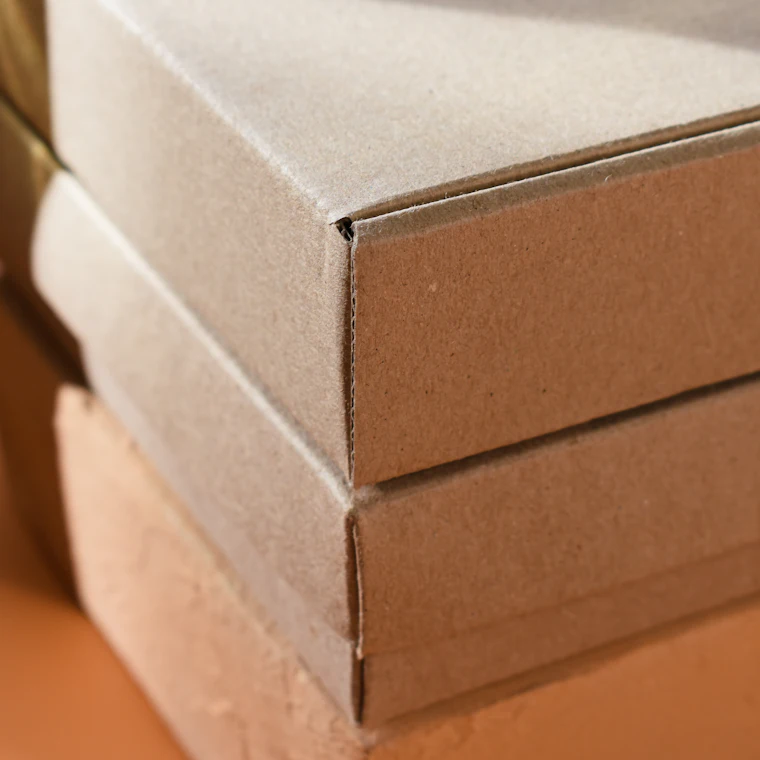
A cardboard carton with a white label

The mandatory particulars under Article 19

The information must be in indelible, easily legible and visible lettering, on the container (the bottle, tube or jar) and on the outer packaging, if there is one, such as a carton.

ParticularWhat it means in practice
Responsible PersonName or registered name and address of whoever answers for the product in the EU
Country of originOnly for products imported from outside the EU
Nominal contentWeight or volume at the time of packaging, in grams or millilitres
Date of minimum durability or PAO“Best used before the end of” date, or period after opening
Precautions for useMandatory warnings and any special precautions
Batch numberCode identifying the production batch
FunctionWhat the product is for, unless clear from its presentation
List of ingredientsINCI list in descending order of weight

The full text of the Regulation is on EUR-Lex.

Responsible Person

The name and address may be abbreviated, as long as the person and their address can be identified. If there are several addresses, the one where the Product Information File (PIF) is available must be highlighted. In private label, the brand owner’s name usually appears.

Nominal content

Not required for packs of less than 5 grams or 5 millilitres, free samples and single-application packs. For products sold by number of items (such as wipes), it is not needed if the number is visible from outside or stated on the pack.

Date of minimum durability or PAO

  • If the product lasts 30 months or less, it needs a date of minimum durability, preceded by the hourglass symbol or the words “best used before the end of”.
  • If it lasts more than 30 months, a date is not required: instead you show the PAO (period after opening), how long the product stays safe once opened, with the open jar symbol followed by the number of months (for example “12M”).

The durability must be supported by the stability data in the PIF.

Precautions, batch number and function

Precautions include the conditions of use set out in the Annexes of the Regulation for certain ingredients, plus any warnings indicated by the safety assessor. The batch number makes production traceable: at Roklar every batch is traceable by code. The function (“intimate wash”, “hand cream”) can be omitted only if it is obvious from the presentation.

List of ingredients (INCI)

It is preceded by the word “ingredients”. Ingredients are listed by their common INCI names (International Nomenclature of Cosmetic Ingredients), in descending order of weight at the time they are added. Below 1% the order is free. Fragrance and flavour are listed as “parfum” and “aroma”, but certain allergenic substances must be listed separately when they exceed the legal thresholds. Colourants are shown by their CI number, and nanomaterials with “(nano)” after the name.

Label languages across the EU

The Regulation leaves it to each Member State to decide the language of some particulars: nominal content, date of minimum durability or PAO, precautions for use and function. Many countries require these particulars in their official language or languages, even when other languages are also on the pack. Before you print, check the rules of every country where you plan to sell.

The INCI list, on the other hand, is never translated: ingredient names are the same throughout the EU, so a consumer with an allergy can recognise them anywhere.

Multi-language labels

If you sell in several countries, you have two options:

  • One multi-language label: the same pack for several markets, with the translated particulars side by side or grouped by language. It simplifies stock and production, but needs space.
  • One version per market: a dedicated label or carton for each country or group of countries. Cleaner design, but more references to manage and print.

This choice affects format and design, so make it before ordering packaging. A carton gives you more room for languages than a small tube. Keep in mind that a distributor who translates your label on their own initiative takes on notification duties (see our guide to the CPNP notification).

Small packs: when space is not enough

The Regulation provides solutions for small containers:

  • Precautions and ingredients on an enclosed leaflet: if, for practical reasons, they cannot go on the pack, they go on an enclosed or attached leaflet, label, tape, tag or card. The pack carries a reference to it, which can be the symbol of a hand pointing at an open book.
  • Outer packaging only: the ingredient list can appear only on the carton; the batch number can go only on the carton when the container is too small.
  • Soaps and very small products: the ingredient list can be on a notice close to the product displayed for sale.

In practice, a carton or box solves many space problems, especially with several languages: see the options on our packaging page.

Labels for the UK market

Great Britain applies the UK Cosmetics Regulation, the British version of the EU rules, so the list of particulars is very similar. The main differences for a product made in Italy:

  • UK Responsible Person: the label must show the name and address of a Responsible Person established in the UK, which an EU address does not replace.
  • Country of origin: products imported into Great Britain, including those made in the EU, must state their country of origin.
  • Language: the particulars must be in English.

Many brands use one label showing both the EU and the UK Responsible Person, provided each is clearly identifiable. Northern Ireland follows special rules: check them for your case. We provide the UK Responsible Person through partners.

Common labelling mistakes

  • Claims you cannot prove: wording such as “dermatologically tested” or “free from…” needs proof and follows precise rules. Read our guide to cosmetic claims and testing.
  • Translated or incomplete INCI: ingredient names written in a national language, or fragrance allergens forgotten.
  • Confusing PAO and date: showing a PAO on a product that lasts less than 30 months, or a date without stability data.
  • Missing languages: a label printed for one country and then shipped to another without the required translations.
  • Inconsistent address: the Responsible Person’s address must match the CPNP notification and the PIF.
  • Text too small or on low-contrast backgrounds: the information is there, but nobody can read it.
  • Artwork approved after printing: every later correction costs a reprint.

The Regulation also requires that texts, names, trade marks and pictures do not attribute characteristics to the product that it does not have. Each Member State sets penalties for non-compliant labelling.

How our designers help

Our in-house designers create labels and cartons and follow them through to print. Mandatory text is checked against the regulatory documentation before the artwork is approved, so the file that goes to print already matches the formula and the PIF.

  1. You send us your brand, ideas and references, or ready-made artwork.
  2. Our designers adapt the artwork to the bottle, tube or carton format.
  3. We add the mandatory particulars, including INCI and the languages you need, and check the claims.
  4. You approve the proof and the artwork goes to print with our packaging suppliers.

Find out more about our graphic design and labels service.

Frequently asked questions

What information is mandatory on a cosmetic label in the EU?

The Responsible Person, the country of origin for imported products, nominal content, date of minimum durability or PAO, precautions, batch number, function and the list of ingredients, as set out in Article 19 of Regulation (EC) No 1223/2009.

Which language must a cosmetic label be in?

Each Member State decides the language for nominal content, durability, precautions and function, and many require their own official language. The INCI list stays in the international nomenclature everywhere.

When do I need a PAO and when an expiry date?

A date of minimum durability is needed if the product lasts 30 months or less. Beyond 30 months you show the PAO, the period the product can be used after opening.

What if the bottle is too small for all the information?

The ingredient list can go only on the carton; if there is no space for practical reasons, precautions and ingredients can go on an enclosed leaflet, with a reference on the pack. Nominal content is not required below 5 grams or 5 millilitres.

What changes on a label for the UK?

The label needs the name and address of a UK Responsible Person, the country of origin for imported products and the particulars in English.

A compliant label from the first print run

Artwork, mandatory text and documents prepared by the same team, with one project manager coordinating everything. Tell us about your product.

Cover of the checklist Launch your cosmetic line in 6 steps

Free checklist

Launch your cosmetic line in 6 steps

Choices, mandatory documents, realistic timelines and mistakes to avoid, in a 4-page PDF. What's inside

Keep reading

  • Graphic design and labelsCustom cosmetic labels for EU and UK markets: our designers create label and carton with the mandatory information and follow print. From 500 units.
  • Claims and testingCosmetic claims in the EU and UK: the 6 common criteria of Regulation 655/2013, free-from claims, dermatologically tested and nickel tested.
  • CPNP notificationCPNP notification for cosmetics: who submits it, when, which data you need and common mistakes. Free, one notification for the whole EU, plus UK SCPN.
  • PackagingCustom cosmetic packaging from the maker of your formula: bottles, tubes, cartons and in-house design, EU and UK ready. From 500 units per SKU.